Posts

January is Alzheimer's Awareness Month
Image
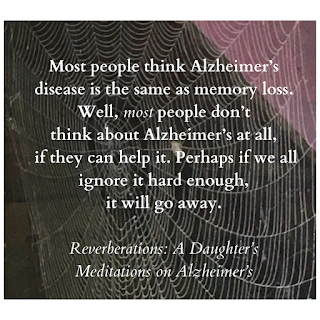
This January has been a full year in and of itself. And it remains Alzheimer's Awareness month.  I posted this photo and caption on Instagram on Monday. (You could follow me there, if you're so inclined. I'm @marionagnew.)  How do you handle fear? Denial was my go-to. I ignored my mother’s confusion and anxiety, her memory lapses. Then I tried to pretend it wasn’t serious—surely not Alzheimer’s. She was still okay. My parents were still parents, still “the grownups.” It wasn’t true, of course. My mother was sick—afraid, disoriented. My father was just keeping up. And it wasn’t fair to them to pretend nothing was wrong. I had to face my fears around disease and loss to forge new relationships with them both. Some people handle fear by cracking jokes—“I forget what I came in here for, it’s probably that Old-Timers.” “I tell you what, if I ever lose it, just take me out back and shoot me.” Some in their audience laugh along. Haha. Ha. Many “haha” through tight smiles, because ...
Indefinite Hyperbolic Numerals

Image
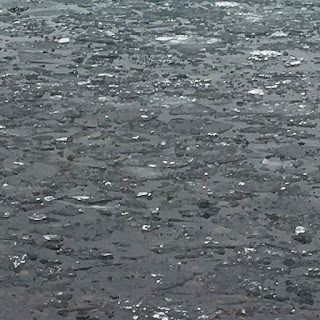
How many is 400,000? How many is 20,000?     In days, 400,000 would be more than a thousand years; 20,000 would be almost fifty-five years.   400,000 pieces of ice? Maybe 20,000? But these numbers represent human beings. Currently, more than 400,000 people in the US have died of COVID-19. The total in Canada has not yet reached 20,000—it’s between 18,000 and 19,000 today.   It feels so impossible to understand 400,000 people. Even 20,000. How do you convey that number? How do you transform numbers—embody them, literally give them skin, bones, breath? Show the people they were?   We’re writers. We should be able to do this. But 400,000 and 20,000 are big numbers. We might as well be using indefinite hyperbolic numerals—words that sound like really big numbers: eleventy-million, a jillion.   Does it help to focus on the little things? Do you talk about the birthday candles each person blew out, their favourite donut, the songs they sang alon...

No, no, nope, no

Image
Sometimes the only words I have are that I have no words.  Just kidding. I have these: "Remember: 'no' can be the most loving thing to say and do.'" Related: Enough. Consequences.  Here is a birch tree. Stay home, stay safe, wear a mask, and hold elected officials accountable. 

Mending, Tending, Extending

Image
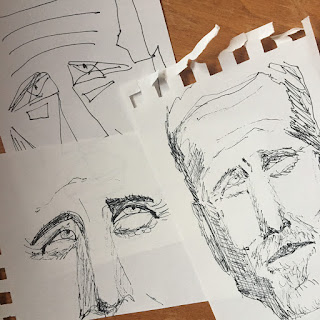
Hello, 2021. Yes, 2020 was the year like no other. The pandemic. The election.   But other things—I’ll resist calling them smaller—happened, too. 2020 was also the year in which I learned about mending, tending, and extending.   * I broke my wrists, both of them, and learned a new acronym: FOOSH, for fall onto outstretched hands. Related: I also became more aware of my intake of calcium and vitamin D, and the value of weight-bearing exercise. Also (again) that impatience doesn’t hurry healing. My first broken bones. (March)   * I drastically cut my to-do lists. It was hard to focus, early in the pandemic, so (beyond the basics—eating, showering) I did one small but important task on a project. And then the next task. Sometimes I could do two in a day, but I only had to do one. And projects got finished. “One thing a day” really helped me stay afloat through all the feelings everywhere. (April)   * I drew Hunter Biden’s face for 31 straight days. It h...

Goodbye Hello

Image
Just to the years. Not me. I'm still here. Goodbye to 2020. Hello to 2021. Here's a random photo, the earliest I downloaded in January last year. No, my name is not Beth, but that's what I tell people when they're making me fancy coffee drinks. It's easier to spell, nobody feels impatient or stupid, and I don't have to drink out of a cup meant for Marianne, Maureen, Maran, etc.  Ah, Beth, we could never have predicted 2020.  Let's do all we can to make 2021 a good year.  Think about the people whose work we've deemed "essential": caring for our health, and the health of our elders. Stocking grocery shelves and packing grocery orders, growing and harvesting and packaging food, driving the trucks that bring it closer to us, cooking it and  bringing it to our homes. Doing all of those same things for prescription drugs. Keeping networks and systems generally functioning so we can connect virtually.  We owe them so much. We can pay them back both i...

The Necessary Perils of Credit

Image
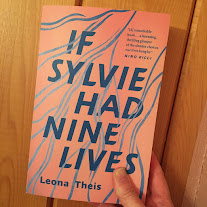
Is it an accident that two of my favourite books of the past year both address the concept of receiving or claiming credit? (No.) In If Sylvie Had Nine Lives , by Leona Theis, Sylvia wonders why there's no real way to get credit for all the things she manages to not shoplift.   And in Marina Endicott's The Difference (AKA The Voyage of the Morning Light ), Kay wishes that people could know just how many pieces of cake she has managed not to eat, how chubby she might have been. Sorry, I don't have page references for these ideas--you'll just have to read the whole books (you'll thank me later). My point here is this: in December of most years, I look at what I'd hoped to accomplish and see where I fell short. It's harder, in spite of all the urging from self-help self-care gurus, to think about what I did get done. I try--I even write a list every Friday of things that happened that week that I'm proud of. But it's easier to focus on the areas where ...

Black Lives Matter in Canada, Too

Image
Last month, I showed a stack of books that constitutes part of my antiracism reading since June. I’ve written about How to Be An Antiracist most recently, here ; about Me and White Supremacy , here ; and about So You Want to Talk About Race , here . Today I want to highlight Black people in Canada. Although all people currently living in North America share history, Canada also has its own history to reckon with. And the two books below are excellent places to start. The Skin We’re In , by Desmond Cole , has won All The Awards, and deservedly so. Cole, a journalist and activist, writes about one year (2017) in journalism in Canada, primarily Toronto. Thirteen broad topics, all different and all depressingly the same, shed light on parts of Canada’s past and present that most of us would prefer to ignore. It’s full of research and great explanations, straight talk and vivid descriptions. I appreciated how Cole doesn’t mince words. Early on, he sets up the reader for what to e...